
The University of Toledo earned top marks from a national research and policy organization for how well it prepares future educators to teach elementary students to read.
The National Council on Teacher Quality awarded undergraduate and graduate early childhood education degree programs in UToledo’s Judith Herb College of Arts, Social Sciences and Education each an A+ in its latest report, Teacher Prep Review: Decoding Progress in Reading Preparation, released on Tuesday, June 9.
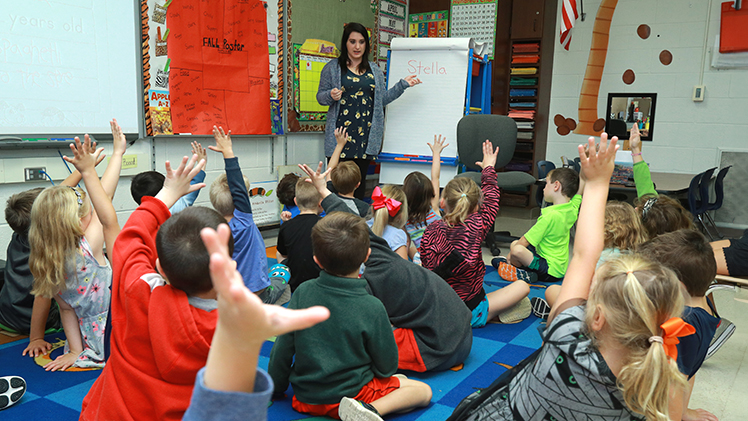
UToledo earned top marks for its undergraduate and graduate early childhood education degree programs in a new report from the National Council on Teacher Quality.
The top marks recognize the programs for educating aspiring teachers according to what literacy experts have identified as the most effective methods of reading instruction — a body of research known as the science of reading.
“This recognition illustrates the expertise and dedication of our faculty who are preparing educators for our community’s schools,” said Dr. Rebecca Schneider, senior associate dean and director of education at the Judith Herb College of Arts, Social Sciences and Education. “Literacy is a fundamental skill, and we’re proud to be recognized for our leadership in supporting it by equipping our students with a strong foundation in the science of reading.”
Four in ten fourth grade students in Ohio cannot read at a basic level, according to data reported by the National Assessment of Educational Progress, underscoring the importance of effective early literacy instruction.
The National Council on Teacher Quality has been evaluating and rating early childhood education programs through its Teacher Prep Review reports since 2013. Its team of experts considers syllabi, including lecture schedules and topics, instructional materials, class assignments and opportunities to practice instruction, among other criteria.
An A+ grade indicates that a program exceeds its standards in five components of scientifically based reading instruction, including phonemic awareness, phonics, fluency, comprehension and vocabulary, without teaching any instructional practices that research has shown to be ineffective or counterproductive to teaching students to read.
“Every child deserves a teacher who has been well prepared to teach reading, and every teacher deserves the opportunity to enter the classroom ready to help students succeed,” National Council on Teacher Quality President Heather Peske said. “Across the country, many teacher preparation programs still do not fully align with the science of reading, but The University of Toledo is demonstrating what strong preparation can look like.”
