
With harmful algal bloom season underway in western Lake Erie, physicians and scientists at The University of Toledo have released two new public service videos designed to help residents and healthcare professionals better understand the potential human-health effects of harmful algal blooms (HAB).
The first video is intended for the public and focuses on recognizing potentially unsafe water, preventing exposure and knowing when to seek medical attention. The second is designed specifically for healthcare professionals and emphasizes obtaining an environmental exposure history, recognizing possible HAB-associated illness, providing appropriate supportive care and reporting suspected cases to public health authorities.
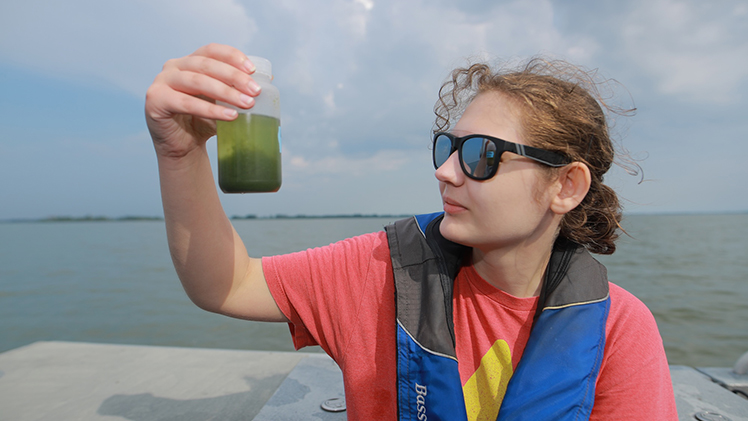
With harmful algal bloom season underway in western Lake Erie, UToledo physicians and scientists have released two new public service videos designed to help residents and healthcare professionals better understand the potential human-health effects of harmful algal blooms.
The videos were developed by Dr. David Kennedy, professor of medicine and co-director of the Great Lakes Center for Fresh Waters and Human Health; Dr. Steven Haller, professor of medicine and director of the Jacobson Center for Clinical and Translational Research; Dr. Joan Duggan, professor of medicine and adult infectious disease specialist; and Dr. Deepa Mukundan, professor and chair of the Department of Pediatrics and pediatric infectious disease specialist.
The effort builds on more than a decade of UToledo research into the human-health effects of harmful algal blooms, as well as the University’s experience during the 2014 Toledo do-not-drink advisory after microcystin associated with a HAB disrupted the region’s drinking-water supply.
Development of the videos was supported in part by the State of Ohio through the Harmful Algal Bloom Research Initiative administered by the Ohio Department of Higher Education, and by National Institutes of Health and National Science Foundation awards supporting the Great Lakes Center for Fresh Waters and Human Health.
“Harmful algal blooms are an environmental issue, but they are also an important public-health issue,” Kennedy said. “People may encounter cyanobacteria and cyanotoxins while swimming, boating, fishing, working near the water or breathing water droplets generated near an affected shoreline. Our goal is to give people useful, practical information that can help them reduce their exposure without creating unnecessary alarm.”
The public-facing video outlines potential symptoms and encourages viewers to follow posted advisories, avoid water that appears discolored or scummy and keep children and pets away from suspected blooms.
“When in doubt, stay out,” Haller said. “Prevention remains the most effective way to protect yourself. Once an exposure has occurred, symptoms can resemble many common gastrointestinal, respiratory, dermatologic and infectious conditions, so recognizing the environmental context can be very important.”
Because symptoms associated with HAB exposure can resemble more common illnesses, the video encourages clinicians to ask patients about recent exposure to lakes, rivers and other bodies of water when evaluating unexplained gastrointestinal, respiratory or skin symptoms.
“Suspected HAB-associated illness can be difficult to recognize because the symptoms are often nonspecific and currently available clinical testing is limited,” Duggan said. “A thoughtful exposure history, careful exclusion of more common causes, and appropriate documentation and reporting can help both the individual patient and the larger public-health community.”
The videos also call attention to potentially vulnerable populations, including children and individuals with underlying respiratory or other chronic medical conditions.
“Parents, caregivers and healthcare professionals should be aware of the possible connection between recent water exposure and new gastrointestinal, skin or respiratory symptoms,” said Mukundan.
Healthcare providers and members of the public are encouraged to report suspected HAB-associated illnesses to their local or state health department. Public health departments use this information to identify patterns and contribute to national surveillance through the Centers for Disease Control and Prevention’s One Health Harmful Algal Bloom System.
The videos, along with additional resources for the public and healthcare professionals, are available through The University of Toledo’s water and human health resource page.
