
Sometimes, a single conversation can change the course of a career.
For Kennedy Ames, that conversation happened thousands of miles from home while celebrating her honeymoon in Barbados.
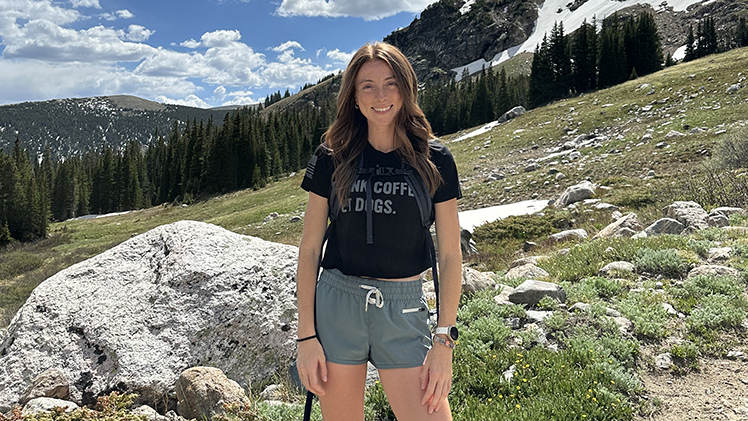
Now a graduate student in UToledo’s Recreation and Leisure Studies – Recreation Therapy Online Program, Kennedy Ames is completing a hands-on internship serving veterans and adaptive athletes in Colorado.
Ames, a Milan, Ohio, native and graduate student in UToledo’s Recreation and Leisure Studies – Recreation Therapy Online Program, had earned a bachelor’s degree in psychology and was preparing for a career in real estate when she met another newlywed from Michigan. As the couples spent the week talking about travel, family and their careers, the conversation turned to recreational therapy.
The woman, a recreational therapist and UToledo graduate, spoke passionately about helping people improve their quality of life through meaningful recreation. By the end of the trip, Ames found herself researching the profession from her hotel room.
“I started looking into recreational therapy while we were still on our honeymoon,” Ames said. “The more I learned, the more excited I became.”
That curiosity quickly grew into a new career path. After researching the profession and shadowing recreational therapists, Ames enrolled in UToledo’s recreational therapy master’s program in spring 2024.
“I heard wonderful things about the program from graduates and faculty,” she said. “From the beginning, I knew UToledo would be the right place for me.”
Today, Ames is putting her education into practice as a full-time intern with Adaptive Adventures, a nonprofit organization that provides free outdoor recreation opportunities for veterans and civilians with physical disabilities, along with their families, caregivers and friends.
Based in Colorado, the organization offers adaptive cycling, hiking, rock climbing, kayaking, stand-up paddleboarding and dragon boat racing, helping participants discover new ways to stay active and connected.
No two days are the same.
One day, Ames may be teaching participants how to balance on a stand-up paddleboard at Stanley Lake. Another day could involve fitting veterans and individuals with disabilities for adaptive bikes and handcycles or assisting with rock climbing in Colorado’s Big Thompson Canyon.
“I love that every day brings a different experience,” Ames said. “Our goal is always to help people safely participate in activities they may have thought were no longer possible.”
Ames chose Adaptive Adventures because it combines two of her passions: serving veterans and expanding access to adaptive sports. Coming from a family with deep military roots, she hopes to build a career supporting veterans through recreational therapy.
Her UToledo education, she said, gave her the confidence to succeed from day one.
“I couldn’t have felt more prepared going into this internship,” Ames said. “My professors gave us every tool possible to be successful. They were supportive, knowledgeable and genuinely invested in helping us grow.”
She credits Dr. Holly Eichner, director of the Recreational Therapy Program, and Wendy Maran, a senior lecturer, for providing guidance throughout the program.
“They have amazing teaching styles, and their support and patience never go unnoticed,” Ames said. “They’ve had a tremendous impact on my education.”
One experience during her internship continues to reinforce why she chose the profession.
During a multisport program, a participant living with a progressive disease admitted she was nervous and unsure whether she could participate. After listening to her concerns, Ames recommended a handcycle with adaptive modifications that better matched her abilities.
Watching the participant ride away with a smile remains one of the most meaningful moments of her internship.
“Seeing her confidence grow in just one experience reminded me why recreational therapy matters,” Ames said.
After graduation, Ames said she hopes to work for the U.S. Department of Veterans Affairs in adaptive recreation, physical rehabilitation or behavioral health, specializing in post-traumatic stress disorder.
She believes recreational therapy is about much more than recreation — it’s about helping people rediscover confidence, independence and purpose.
One quote displayed at Adaptive Adventures has become a personal philosophy.
“Push pedals, not pills,” Ames said. “While medication certainly has its place, recreational therapy embraces a holistic approach that focuses on the whole person — body, mind and lifestyle. I want to help people discover their strengths and create meaningful leisure experiences for individuals of all abilities.”
For students considering recreational therapy, Ames has one message:
“UToledo prepared me to become a fully competent recreational therapist and working professional. The coursework, clinical experiences and support from faculty made me feel ready for my internship and for my future career.”
